
Timeline
2010
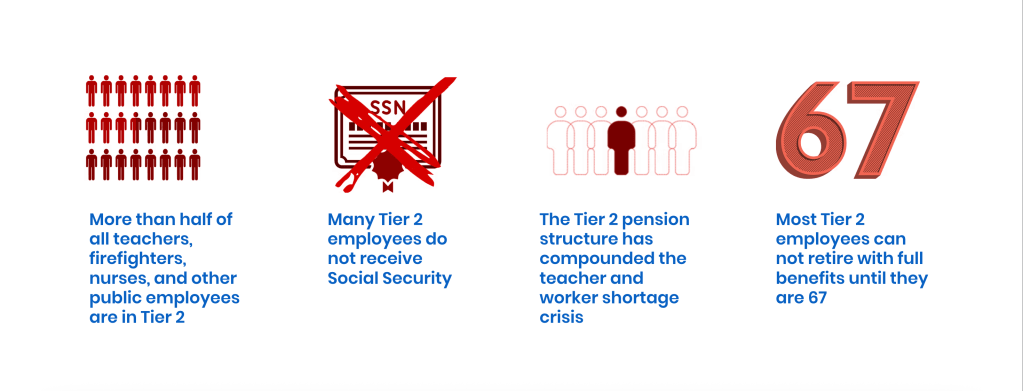
Springfield politicians created a “Tier 2” of lower pension benefits in an attempt to fix the state’s financial problems by cutting benefits for public workers like teachers, fire fighters, nurses and many more.
Any public employee who began employment on or after Jan 1, 2011 is part of a “Tier 2” pension system.
Pension Details
(TRS)Tier 1 Tier 2 When can you retire (for full benefits)? 60 / 55 with 35 years of service 67 with 10 years service How is my retirement benefit calculated? Average of the highest earnings over four years in your consecutive last 10 years of service Average of the highest earnings over eight years in your consecutive last 10 years of service What is the amount of my annual pension increase? 3% compounded annually Lower of 3% (compounded annually) OR one-half of increase in Consumer Price Index (your pension will not keep up with average inflation). What is the relationship to Safe Harbor laws? Does not violate Safe Harbor – better than Social Security. Tier 2 will violate federal safe harbor laws – potentially requires social security for members 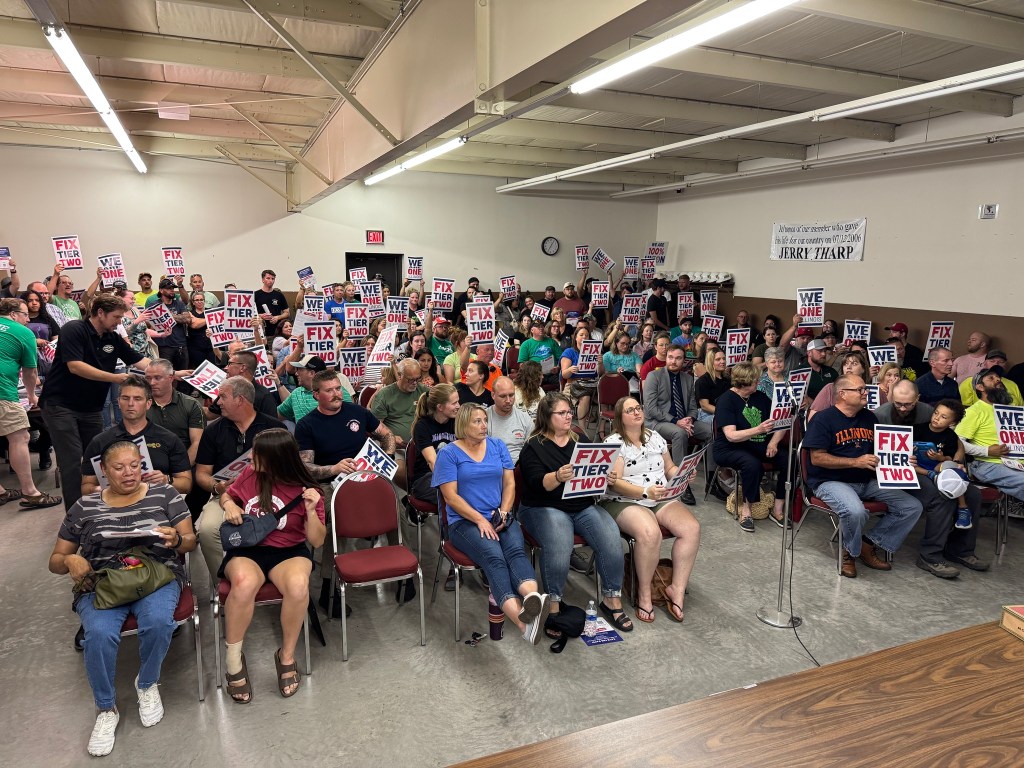
2011
AFL-CIO begins a coalition building effort of Illinois public unions – called We Are One Illinois – to fight for Tier 2 reform through mobilizing efforts including town halls, witness slips, organized legislator phone calls, and more.

2024
Thousands gather in the largest rally at the Springfield Capitol Building. Representatives from each of the major public sector unions speak to encourage lawmakers to act.
A pension reform bill – SB2024 -supported by the We Are One Illinois coalition is introduced directly following the rally. The General Assembly will not take a floor vote on it, saying more negotiation is needed to meet the Governor’s demands.
2025
New legislation – SB1937 – is negotiated by union leaders that meets a new set of Governor Pritzker’s demands:
Any Pension reform must be fully funded
- The Governor’s requested pension fund increase has already taken effect – and will help fund Tier 2 changes along with other changes.
Illinois cannot receive a credit downgrade from the bond rating agencies
- Once Illinois pays off its pension obligation bonds, the same payments can be shifted to Tier 2 – resulting in a credit-neutral funding solution.
No state revenue increased
- Illinois has already set aside millions for when the state is inevitably sued for violating safe harbor provisions. This “Safe Harbor Fund” will instead be used to fill the funding gap in the short term while pension obligation bonds expire.
October– SB1937 passes out of committee. Tens of thousands more fill out witness slips as proponents of the legislation.
No floor vote is taken. Governor Pritzker’s demands have shifted once again, and the General Assembly is unwilling to risk political capital to take up the vote.
November – IEA members begin development on a new plan to Undo Tier 2. It calls for a return to effective, old-style unionism: member-to-member organizing to leverage a union’s greatest power: labor.
2026
IEA lobbyists promote new legislative agenda. Tier 2 is not amongst top priorities, as there is “nothing more that can be done until the Governor decides to come to the negotiating table”.

We’ve tried mobilizing: phone calls, rallies, town halls, witness slips, social media, and more. Tier 2 has persisted through those efforts for over 15 years. Between lackluster “Safe Harbor” pension reform plans by the Governor and public pension threats by outside groups, the time to demand change is NOW.
 Make the Ask